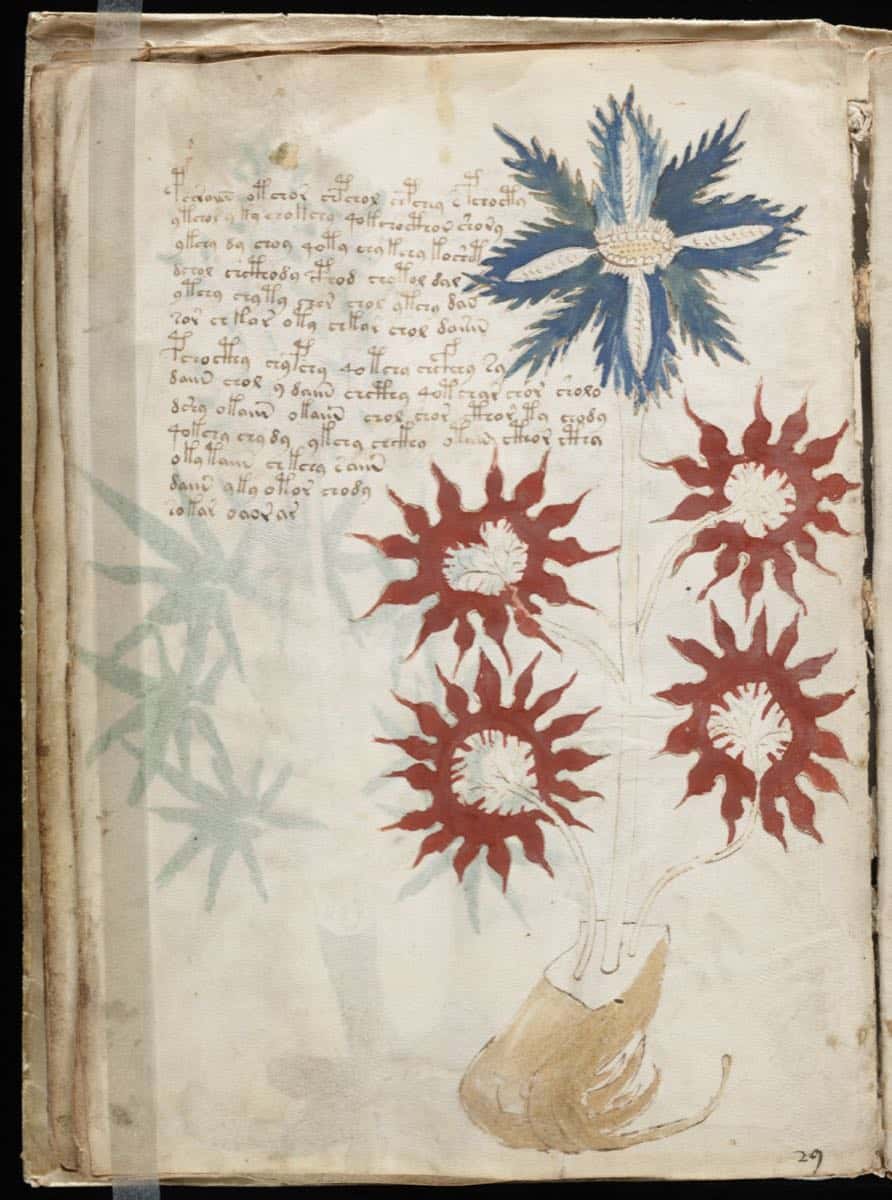
A fifteenth-century book written in a script no one on Earth can read. Not one sentence has been translated with confidence.
VOYNICH MANUSCRIPT FOLIO · BEINECKE LIBRARY, YALE · PUBLIC DOMAIN
The known landscape
A 15th-century book sits behind glass, filled cover to cover with a script no one on Earth can read. Not a single sentence has ever been translated with confidence.
Radiocarbon dating places the vellum in the early 1400s. The text follows consistent statistical patterns, like a real language, and the pages are illustrated with plants that match no known species, star charts, and small bathing figures.
The edge
Every proposed decipherment — cipher, constructed language, glossolalia, elaborate hoax — collapses under closer scrutiny. Cryptographers have thrown modern computational tools at it for decades without a reading that survives peer review.
Contemplative inquiry
If it is a language, whose, and why does no other trace of it survive? If it is a hoax, what could possibly justify the centuries of consistent, disciplined effort it would have taken to fake it convincingly?